KPI stands for Key Performance Indicator. It refers to a measurable value that demonstrates how effectively an individual, team, or organization is achieving a specific business objective. In the context of digital marketing, KPIs help you track the effectiveness of your campaigns and determine whether your efforts are aligned with your goals.
Here are the most common KPI metrics used in digital marketing, particularly for PPC campaigns, and what they measure:
1. Click-Through Rate (CTR)
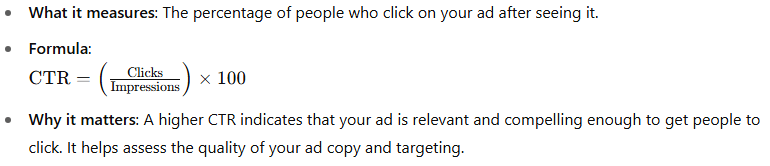
2. Cost Per Click (CPC)

3. Conversion Rate

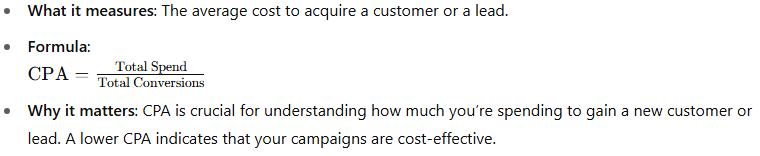
4. Cost Per Acquisition (CPA)
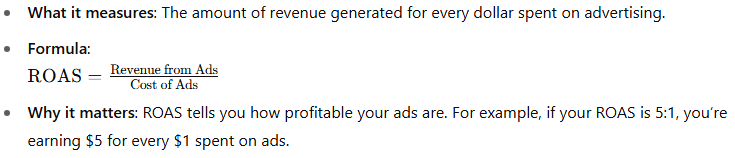
5. Return on Ad Spend (ROAS)
6. Impressions
- What it measures: The total number of times your ad is shown to a user.
- Why it matters: While impressions don’t necessarily lead to clicks or conversions, they help assess the reach of your ad. A high number of impressions can increase brand awareness, but it’s also important to track performance beyond just visibility.
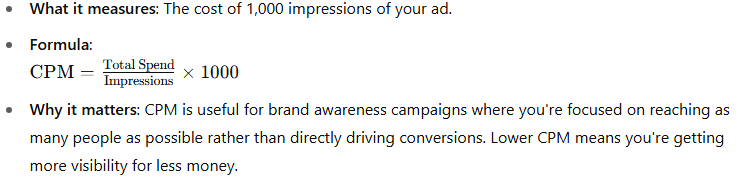
7. Cost Per Thousand Impressions (CPM)
8. Lifetime Value (LTV)
- What it measures: The total revenue you expect from a customer throughout their relationship with your business.
- Why it matters: LTV helps you determine how much you can afford to spend on customer acquisition (using your CPA or ROAS) while still remaining profitable in the long term.
9. Bounce Rate

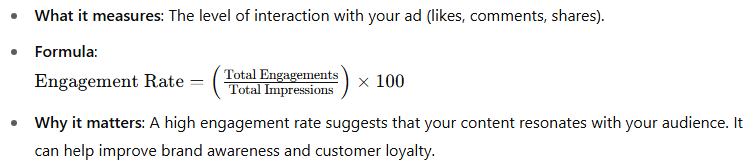
10. Engagement Rate (for Social Ads)
11. Average Position (for Search Ads)
- What it measures: The average position of your ad in the search engine results page (SERP).
- Why it matters: If your average position is too low, it means your ad isn’t showing up in a competitive spot. You may need to adjust your bid or improve the quality of your ads to move higher in the rankings.
12. Ad Frequency
- What it measures: The average number of times your ad is shown to the same person.
- Why it matters: Too high a frequency can lead to ad fatigue, where users stop engaging with your ad. If your frequency is too low, you may need to increase your budget to reach a broader audience.
13. Quality Score (for Google Ads)
- What it measures: A metric used by Google Ads to determine the relevance and quality of your ads, keywords, and landing page.
- Why it matters: A higher Quality Score can lead to lower CPCs and better ad placements. It’s influenced by factors like CTR, relevance of the ad copy to the keywords, and the user experience on the landing page.
14. Time on Site
- What it measures: The average amount of time users spend on your website after clicking on your ad.
- Why it matters: The more time users spend on your site, the higher the chance they’ll convert. A low time on site could indicate that your landing page or website isn’t engaging enough.
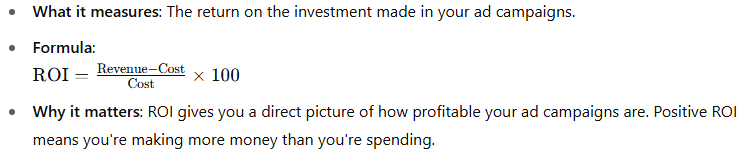
15. Return on Investment (ROI)
Conclusion
These KPIs are crucial for understanding the effectiveness of your digital marketing campaigns and ensuring you’re optimizing for the right outcomes. Depending on your goals (brand awareness, lead generation, sales), you’ll track different KPIs to get a complete picture of how your campaigns are performing.
 MCSR MARKETING CONSULTANCY
Leave a comment